
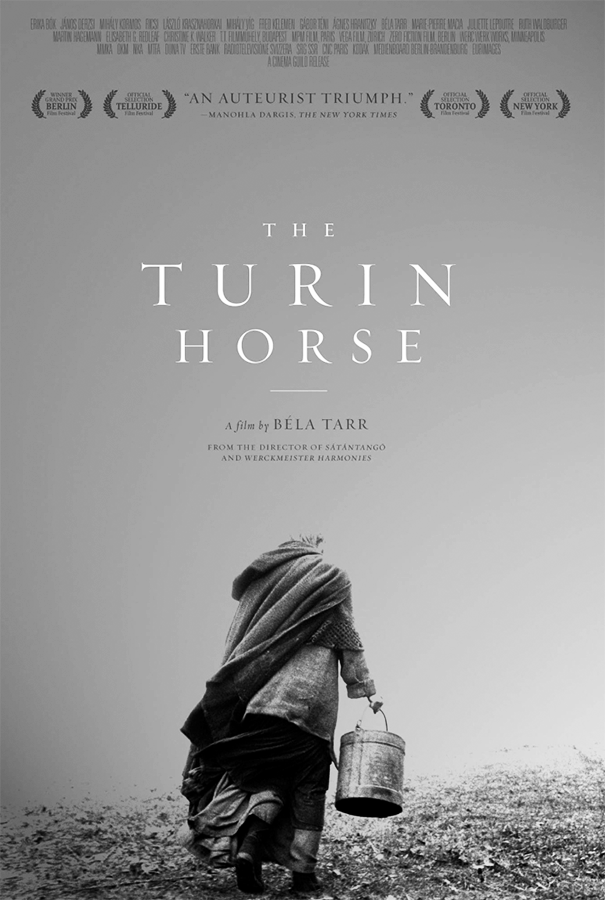
Original title: A torinói ló (2011), 2 h 35 min
Jos haluat tehdä hipstereihin vaikutuksen jossain taidegallerian avajaisissa, kehu Béla Tarrin elokuvia, vaikket olisi niitä nähnytkään. Jos joku kysyy, mistä elokuva kertoi, sano vain, että: “Se kertoo ihmisen loputtomasta yksinäisyydestä ja pyrkimyksestä löytää tarkoitus kaoottisessa ja vihamielisessä maailmassa.” Ympärilläsi olevat ihmiset Balenciagan-paidoissaan nyökyttelevät ja hymisevät hyväksyvästi miltei niin innostuneesti, että Veuve Clicquot -samppanja läikkyy heidän laseistaan.
Elokuvan nimi tulee tarinasta, joka kerrotaan elokuvan alussa. Friedrich Nietzsche, kuuluisa filosofi, joka muistetaan “Jumala on kuollut” -mietelauseestaan, näkee, kuinka mies hakkaa hevosta Torinon kadulla, kun se ei enää jaksa vetää kärryjä perässään. Näky on niin shokeeraava, että Nietzsche kokee henkisen romahduksen eikä toivu siitä enää koskaan. Tarinan todenperäisyydestä ei ole takeita. Totta on varmasti se, että Nietzsche koki Torinossa hermoromahduksen vuonna 1889, josta hän ei koskaan toipunut, mutta johtuiko se kyseisestä eläinrääkkäystapauksesta, jää arvailujen varaan.
Elokuvan alussa mies ajaa hevosen vetämillä kärryillä kotiaan kohti. Taustalla soi monotoninen, synkänjylhä musiikki, joka toistuu useita kertoja elokuvan aikana. Elokuva seuraa miehen ja hänen tyttärensä köyhyyden kurjistamaa elämää jossain maaseudulla. Oletettavasti hevonen on juuri se hevonen, jota tämä mies tulee myöhemmin hakkaamaan Torinon torilla. Sitä ei elokuvassa sen kummemmin selitetä.
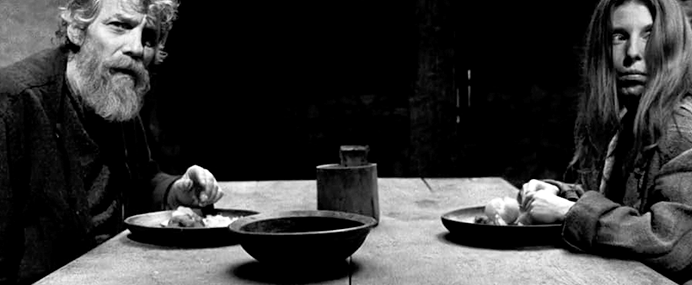
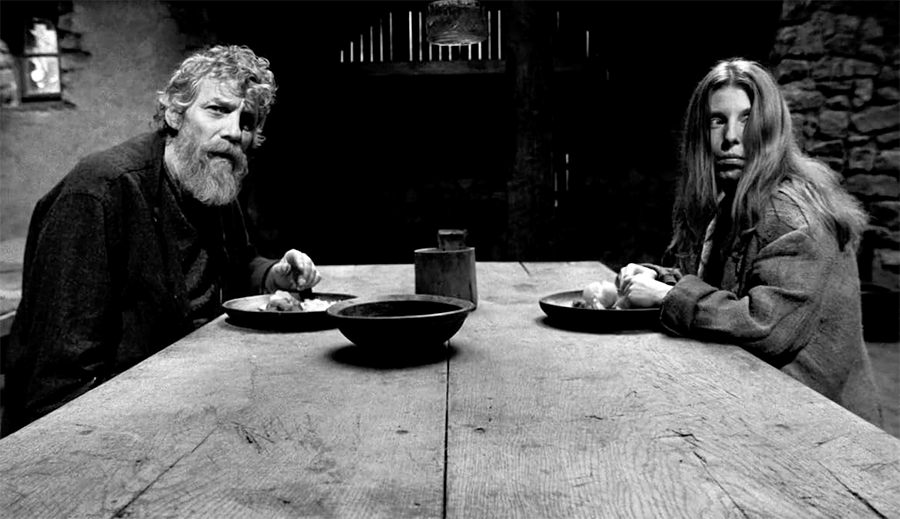
Elämä on synkkää kärsimystä ja sitten sitä kuolee. Tämän sanoman saa irti elokuvasta sen ensimmäisten 30 minuutin aikana. Elokuvassa puhutaan äärimmäisen vähän, ja useita elämäntilanteita seurataan piinallisen pitkäkestoisesti. Kun nainen keittää köyhien jokapäiväiset potut, köyhät syövät ne vailla minkäänlaisia ruokailuvälineitä: he raastavat sormenpäillään polttavien pottujen kuoret elämellisellä vimmalla ja sullovat potun suuhunsa ilman minkäänlaista juomaa. Potusta syödään puolet ja loput heitetään roskikseen. Elokuvassa näytetään myös, miten köyhät nostavat kaivosta vettä vanhalla puusankolla, jossa on vain naru kahvassa. Isä ripustaa köyhien repaleisia rättejä kuivumaan narulle, jonka hän joka kerta sitoo ainoalla terveellä kädellään seinässä olevaan käyrään naulaan – ja tietenkin umpisolmuun, jotta elämän kurjuus maksimoidaan, kun hän yrittää seuraavalla kerralla avata umpisolmua.
Olen mielestäni elänyt ja kokenut köyhän elämän. Köyhyyden kokemusasiantuntijana voin sanoa, että rajatut resurssit opettavat neuvokkaaksi – eivät tyhmäksi. Rikkaat ovat tyhmiä – he elävät tuhlailevaa elämää, ja joku muu tekee työt: pesee pyykit, nostaa vettä kaivosta ja ratkaisee kaikki elämän ongelmat. Köyhä ymmärtää, että ruokaa pitää arvostaa ja että perunankuoret sisältävät paljon hyviä vitamiineja ja hivenaineita. Perunat voi syödä kuorineen, varsinkin kun ne ovat hyvin pestyjä eivätkä kovin rupisia. Ruokaa heitettiin harvoin pois. Jos lapsena valitti, ettei ruoka ole hyvää eikä sitä halua syödä, äiti sanoi: “Ajattele Afrikan lapsia.”
Köyhillä ihmisillä on vähän omaisuutta, mutta se vähä, mitä heillä on, on merkittävää, ja sitä arvostetaan. Elokuvan köyhän perheen koti oli ränsistynyt ja huonosti ylläpidetty. Pihalla ei kasvanut yhtään mitään muuta kuin ruohoa. Mistä perhe sai ruokansa ja elantonsa? Miksi he olivat niin laiskoja ja tyhmiä? Todellisuudessa monet vähävaraiset viljelisivät pihalla ruokakasveja tai ainakin pitäisivät puutarhaa, joka piristäisi muuten karua arkea. Tuona aikana miehet ja naiset tekivät paljon käsitöitä. Puusta veistetyt lusikat tai kirjaillut pöytäliinat pystyi myymään ja siten tuomaan talouteen rahaa – ja jos käsityöt eivät menneet kaupaksi, ne tulivat käyttöön omassa taloudessa. Näin toimisivat oikeat, todelliset ihmiset, jotka joutuvat miettimään, miten perhe ruokitaan ja miten elämästä saisi siedettävämpää.
Béla Tarrin maailmassa köyhät ovat kuin jostain satukirjasta. Tarrin mielestä heidän kurjuutensa on heidän omaa syytään, koska he ovat niin vähä-älyisiä, lahjattomia ja sivistymättömiä. Siinä Béla Tarrin teos vertautuu suomalaisiin TV-viihteen klassikoihin, kuten Jouko Turkan “Kiimaiset poliisit” tai “Seitsemän veljestä”, joissa todellisuus on vahvasti fantasian tai unen logiikan sävyttämää. Ja kuten Jouko Turkankin teokset, myös Torinon hevonen saa tahattoman koomisia piirteitä liioitellessaan henkilöhahmojen heikkouksia ja tilanteita, joihin he ajautuvat.
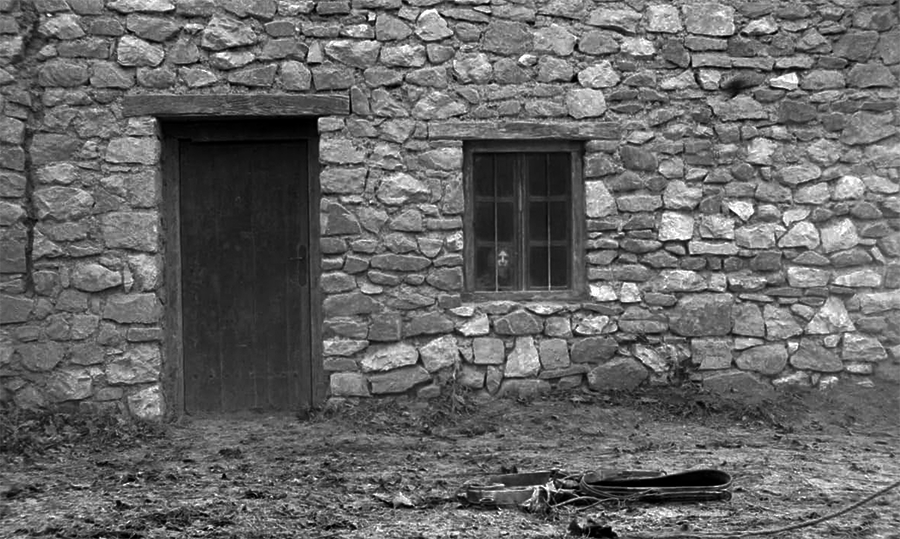
Elokuvan musiikin sävelsi Mihály Vig, ja se toimii hyvin minimalismissaan. Kuvauksesta vastasi Fred Kelemen, jonka kuvat olivatkin todella onnistuneita ja mieleenpainuvia. Yksi tällainen oli tilanne, jossa kuvataan taloa ulkoapäin, ja ulkona on myrsky, joka pöllyttää irtolehtiä, ja naisen kalpeat, totiset kasvot näkyvät ikkunassa. Béla Tarr muistetaan varmasti kiitollisuudella tuulikoneiden valmistajien ja elokuva-avustajien keskuudessa. Torinon hevosessa tuuli koko ajan, ja kuivia puiden lehtiä lensi tonnikaupalla, vaikka maisemassa ei näkynyt kuin kolme puuta.
=== TRANSLATION IN ENGLISH ====
The Turin Horse
Original title: A torinói ló (2011), 2 h 35 min
If you want to impress hipsters at an art gallery opening, praise Béla Tarr’s films, even if you’ve never seen them. If someone asks what the film was about, just say: “It’s about the endless loneliness of human beings and their attempt to find meaning in a chaotic and hostile world.” The people around you, in their Balenciaga shirts, will nod and hum their approval so enthusiastically that Veuve Clicquot champagne is almost spilling from their glasses.
The film’s title comes from a story told at the beginning. Friedrich Nietzsche, the famous philosopher remembered for the saying “God is dead,” sees a man beating a horse in a Turin street because it can no longer pull the cart behind it. The sight is so shocking that Nietzsche suffers a mental breakdown and never recovers. There is no guarantee that the story is true. What is certainly true is that Nietzsche suffered a breakdown in Turin in 1889 and never recovered, but whether the animal abuse incident caused it is open to speculation.
At the beginning of the film, a man drives home in a horse-drawn cart. A monotonous, bleak and brooding piece of music plays in the background, recurring several times throughout the film. The film follows the poverty-stricken life of the man and his daughter somewhere in the countryside. Presumably, this is the very horse that the man will later beat in a square in Turin. The film doesn’t explain it any further.
Life is bleak suffering, and then you die. You can get that message from the film within its first 30 minutes. Very little is said, and several everyday situations are followed for painfully long stretches. When the woman boils the poor family’s potatoes, they eat them without any cutlery: they scrape the scalding skins off the potatoes with their fingertips, with a vivid fervour, and shove the potato into their mouths without any kind of drink. They eat half the potato and throw the rest in the rubbish. The film also shows the poor drawing water from a well with an old wooden bucket that has only a rope for a handle. The father hangs the poor family’s ragged clothes out to dry on a line, which he ties each time with his only good hand to a bent nail in the wall—and, of course, in a knot, to maximise the misery of life when he has to undo it the next time.
I think I’ve lived and experienced a poor person’s life. As someone with lived experience of poverty, I can say that limited resources teach you to be resourceful—not stupid. Rich people are stupid: they lead wasteful lives, and someone else does the work. Washes the laundry, draws water from the well, and solves all of life’s problems. Poor people understand that food should be valued, and that potato skins contain plenty of good vitamins and trace minerals. You can eat potatoes with their skins on, especially when they’re well washed and not too scabby. Food was rarely thrown away. If, as a child, you complained that the food wasn’t good and you didn’t want to eat it, your mother would say: “Think of the children in Africa.”
Poor people own very little, but what little they do own matters, and they value it. The poor family’s home in the film was dilapidated and badly maintained. Nothing grew in the yard except grass. Where did the family get its food and livelihood? Why were they so lazy and stupid? In reality, many people with limited means would grow food crops in the yard, or at least keep a garden to brighten an otherwise harsh daily life. In those days, men and women did a lot of handicrafts. Wooden spoons or embroidered tablecloths could be sold to bring money into the household—and if the crafts didn’t sell, they could be put to use at home. That is what real people would do when they had to think about how to feed their family and make life more bearable. In Béla Tarr’s world, the poor are like characters from a fairy tale. Tarr seems to think their misery is their own fault, because they are so dim-witted, untalented and uncultured. In that respect, Béla Tarr’s work is comparable to Finnish TV classics such as Jouko Turkka’s “Kiimaiset poliisit” (“Horny Cops”) or “Seitsemän veljestä” (“The Seven Brothers”), where reality is strongly coloured by the logic of fantasy or dreams. And, like Jouko Turkka’s works, The Turin Horse also takes on unintentionally comic qualities as it exaggerates the weaknesses of its characters and the situations they find themselves in.
The film’s music was composed by Mihály Vig, and it works well in its minimalism. Fred Kelemen was responsible for the cinematography, and his images were truly successful and memorable. One such moment shows the house from the outside during a storm, with loose leaves whirling about and the woman’s pale, serious face visible in the window. Béla Tarr will surely be remembered fondly by the makers of wind machines and film extras. In The Turin Horse, the wind blew constantly, and dry leaves flew by the ton, even though there were only three trees in sight.
#TheTurinHorse #TorinonHevonen #BelaTarr #FilmReview #HonestOpinion #ArtHouseCinema #MovieReview #RehellinenMielipide #ElokuvaArvostelu #MaalaisJärkeä #SocialPorn #SosiaaliPornoa